How to pay yourself for the rest of the year
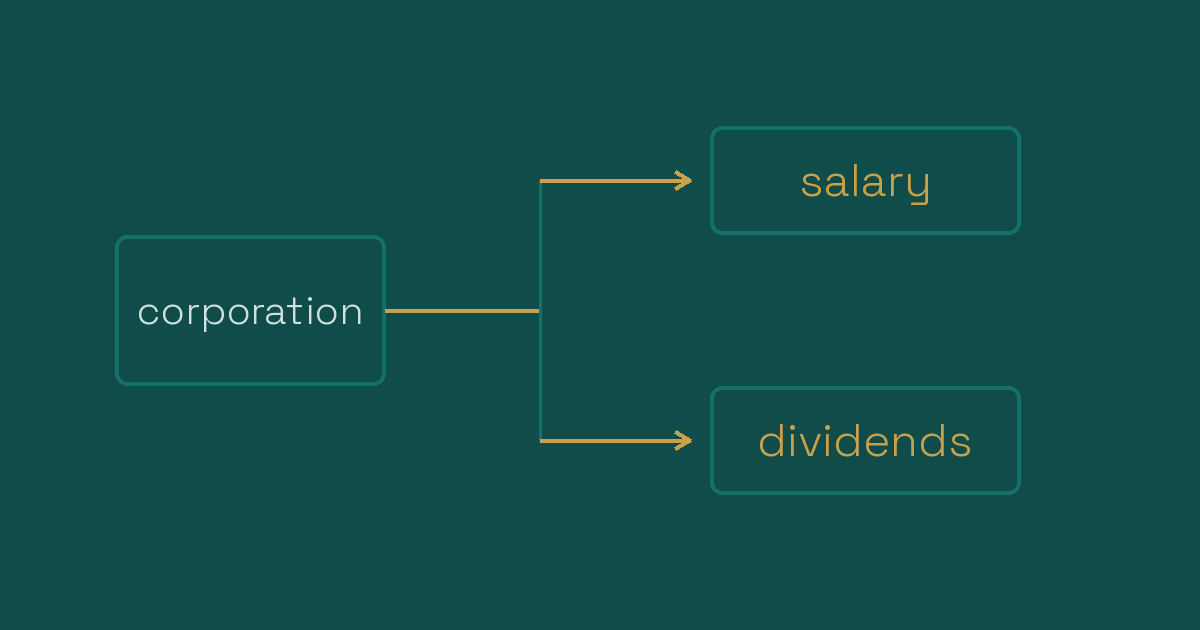
You may already have a way of paying yourself that works. The question before year-end is whether it still fits this year's business results, your personal tax position and the retirement plan you are building.
Repeating last year's mix is convenient. Choosing a different mix simply because someone says dividends are cheaper is not much of a plan either.
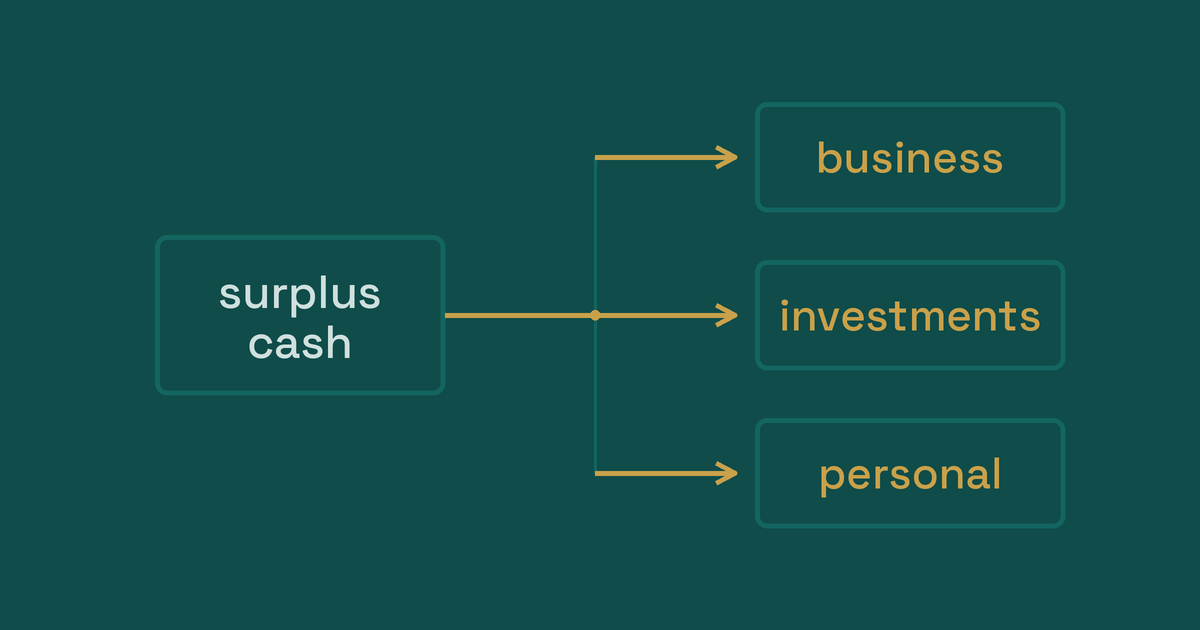
In Excess cash in your corporation, we looked at how to put retained money to work. This is the next decision: when some of that money belongs outside the company, how should it reach you?
The short answer
Compare salary, dividends and a combination on the same basis. Look at the total corporate cost, what remains personally after tax, the retirement implications and the payment dates.
Then separate decisions still available for the rest of the year from payments already made. The aim is a coordinated compensation plan, not simply the lowest number on one tax return.
Compare the full cost, not just the personal tax
A salary and a dividend of the same dollar amount are not an equal-cost comparison for the business. Reasonable salary for work performed can generally be deducted in calculating corporate business income, subject to the usual income-earning and timing requirements.12 A regular dividend distributes corporate profits rather than creating the same salary expense; the dividend system links the corporate and personal tax layers through gross-up and tax-credit rules.3
That is why I would ask for a comparison starting with the same amount of corporate profit before owner compensation and the related corporate tax. Include employer payroll costs where they apply, then compare what reaches you after your personal tax.
If you are withdrawing profits retained from earlier years, identify that separately. Ask how any salary deduction would be used in the company's actual circumstances, rather than assuming it immediately reverses the tax paid in the past.
The comparison should answer three questions:
- What leaves the company? Include the payment, applicable employer costs, corporate tax effects and any relevant refund.
- What do you keep personally? Compare the amount after personal tax and employee contributions, not just the transfer into your bank account.
- What does the choice support? Include retirement savings, pension participation and the flexibility you want in future years.
I would not assume that salary, dividends or a blend always wins. Ask for the difference in dollars and an explanation of what you gain or give up.
Connect this year's salary with next year's RRSP room
Employment income contributes to the earned-income calculation used for RRSP room; ordinary dividend income does not.4 New room is generally based on 18% of the previous year's earned income, up to the annual dollar limit, with pension adjustments and other adjustments where applicable.5
The timing matters: salary received in 2026 generally helps create room for 2027, not additional room for 2026.5 The published RRSP dollar limit is $33,810 for 2026 and $35,390 for 2027.6
Here is a simplified illustration, assuming salary is the only earned income and there are no pension adjustments or other reductions:
| Salary received in 2026 | New earnings-based RRSP room for 2027 |
|---|---|
| $100,000 | $18,000 |
| $150,000 | $27,000 |
| $196,612 | $35,390, the annual cap |
These calculations apply the 18% formula and the 2027 cap; they do not show your total available contribution room, which may include unused room from earlier years.56 Confirm your own available room before contributing.
Maximizing salary just to reach a ceiling is not the objective. Ask whether you intend to use the resulting room, whether an RRSP fits your retirement plan and what the compensation change would cost overall.
Include CPP without reducing it to a tax bill
Salary from pensionable employment generally brings both employee and employer CPP contributions, subject to age, earnings and other applicable rules.78 I would consider those contributions alongside the role you want CPP to play in retirement, rather than comparing only the immediate cash cost.
For 2026, the main CPP earnings ceiling is $74,600; CPP2 applies to the additional earnings band up to $85,000.78 Under the standard full-year rules, the combined maximum CPP and CPP2 contribution is $4,646.45 for the employee and the same amount for the employer.78
For a late-year salary or bonus, ask what has already been contributed through this employer. Do not apply a full year's contribution cost to every extra payment, or assume amounts paid through another employer remove this company's obligations.78
This discussion uses CPP rather than Quebec's separate pension rules. Have payroll confirm the applicable treatment, including any age-related election or exception.
Check the company's dividend position
Not all taxable dividends have the same treatment. Eligible and non-eligible dividends have different gross-up and tax-credit rules, and the company must properly designate an eligible dividend.3 For a Canadian-controlled private corporation, its general rate income pool helps determine its capacity to pay eligible dividends without an excessive-designation tax.9
You do not need to memorize the account names. You do need the proposed dividend type confirmed before comparing personal tax outcomes.
There is another question if the corporation holds investments: would a taxable dividend release a refund of tax previously held in its refundable tax accounts? Such a refund can be available when the company pays qualifying taxable dividends, subject to its balances and the applicable ordering rules.10
That makes this more than a personal tax calculation. Ask your accountant to include any corporate refund in the comparison, rather than evaluating the dividend only through your own tax return.
If you are also reviewing where corporate investments should be held, What is a holding company in Canada? explains the structural questions. A change in structure and a change in compensation should have a shared purpose, not be two unrelated recommendations.
Separate the calendar year from the corporate year-end
Your corporation may not have a December 31 year-end. A year-end bonus can therefore involve more than one clock: the company's deduction timing and the year you receive the employment income.
Bonuses are reported as employment income in the year received.11 A qualifying accrued remuneration expense generally must be paid within 180 days after the corporation's taxation year-end to remain deductible in that earlier corporate year; otherwise, the deduction generally moves to the year paid.12
Those are different rules. The 180-day rule does not automatically turn a payment received next year into this year's personal employment income.
For example, assume a corporation has a December 31, 2026 year-end and properly accrues a deductible bonus. If the owner receives it in February 2027 and the applicable requirements are satisfied, the corporate deduction can relate to 2026 while the owner reports employment income in 2027.1112 That income would generally contribute to the 2028 RRSP-room calculation, not 2027.5
Ask your accountant to put the payment date, payroll remittance date, corporate deduction year and personal income year beside each other. Confirm whether the proposed payment is actually received or otherwise treated as paid for tax purposes.
Review the payments already made
Start the year-end meeting with an accurate record of salary, dividends, payroll deductions and amounts posted to the shareholder account. This is a review of how the payments were treated, not a household budgeting exercise.
Do not assume that a recorded salary payment can simply be renamed a dividend when the annual tax comparison is completed. CRA guidance distinguishes correcting reporting errors from retroactively changing the nature of income already paid.13
For any amount recorded as owing to or from you, ask your accountant to confirm what it represents and what action is required. Keep that review separate from choosing the next salary or dividend payment.
The useful output is a short written plan: the remaining payments, their treatment, the dates and who will complete the records, remittances and slips. Your financial advisor should then reflect the same assumptions in your retirement and investment plan.
Leave room for a different kind of dividend
Before authorizing a taxable dividend, ask whether the corporation has a capital dividend account balance that should be reviewed. A properly elected capital dividend can generally be received tax-free by a Canadian-resident shareholder, subject to the applicable rules.14
That is not the same thing as an eligible dividend. It requires its own calculation and election; the usual election deadline is the earlier of the date the dividend becomes payable and the first date any portion is paid.14
Do not treat a retained-earnings balance or bank balance as proof that a capital dividend is available. Have the account and paperwork confirmed first.
The next issue will look at the capital dividend account in more detail. For now, it belongs on the list of questions to resolve before deciding that every withdrawal must be salary or a taxable dividend.
The bottom line
The strongest compensation decision connects the business and the owner. Compare total cost, after-tax cash, retirement implications and timing, then put the remaining payments into a clear plan.
You do not need another generic answer to “salary or dividends?” You need to understand what each option changes in your circumstances and why the recommended approach fits.
Matthew Arthur, CFP®, CIM® · matthew@profittoprosperity.ca · Subscribe to the newsletter
Common questions
Is salary or dividends better for a Canadian business owner?
Neither should be assumed to be better without a comparison. Review both using the same corporate starting point, and include personal tax, employer costs, retirement objectives and any corporate tax refund. Consider a combination where it serves a defined purpose.
Does salary paid in 2026 create RRSP room for 2026?
Generally, no. The new earnings-based room for a year uses the preceding year's earned income, so salary received in 2026 generally affects 2027 room.5 Existing unused room is a separate matter, so confirm your own available amount before making a contribution.
How much 2026 salary would reach the 2027 RRSP limit?
Approximately $196,612 of earned income produces the $35,390 maximum earnings-based addition before pension adjustments or other reductions.56 That is an illustration, not a recommended salary, and it does not mean everyone should aim for the maximum.
Can I pay myself both salary and dividends?
The two methods can form part of the same plan, with the salary handled through the applicable payroll process and the dividend properly documented and reported.311 Ask what role each payment serves rather than assuming a blend is automatically more efficient.
Does the 180-day bonus rule determine my personal tax year?
No. It concerns the timing of the corporate deduction for qualifying unpaid remuneration, while a bonus is generally employment income in the year received.1112 Have both dates reviewed before relying on a particular tax-year result.
Can I change earlier salary payments to dividends at year-end?
Do not assume so. CRA says that amending slips cannot be used to change the nature of income, such as retroactively converting salary to dividends; correcting a genuine reporting error is different.13
Is a capital dividend the same as an eligible dividend?
No. An eligible dividend is a taxable dividend with its own designation and tax-credit treatment, while a capital dividend uses a separate capital dividend account and election process.314 Ask the accountant to identify which payment is available before making it.
Primary sources
Rules and figures checked October 16, 2026. The examples are simplified and should be applied only after reviewing the relevant corporate and personal circumstances.
- Income Tax Act, paragraph 18(1)(a): income-earning purpose of expenses, Department of Justice Canada.
- Income Tax Act, section 67: reasonableness of expenses, Department of Justice Canada.
- Income Tax Folio S3-F2-C2: Taxable Dividends from Corporations Resident in Canada, Canada Revenue Agency.
- RRSPs and Other Registered Plans for Retirement: Chart 3 and earned income, Canada Revenue Agency.
- How contributions affect your RRSP deduction limit, Canada Revenue Agency.
- MP, DB, RRSP, DPSP, ALDA, TFSA limits, YMPE and YAMPE, Canada Revenue Agency.
- CPP contribution rates, maximums and exemptions, Canada Revenue Agency.
- Second additional CPP contribution rates and maximums, Canada Revenue Agency.
- General rate income pool, Canada Revenue Agency.
- T2 Corporation Income Tax Guide, Chapter 6: dividend refunds, Canada Revenue Agency.
- Bonuses, retroactive pay increases or irregular amounts, Canada Revenue Agency.
- Income Tax Act, subsection 78(4): unpaid remuneration, Department of Justice Canada.
- Amend, cancel, add or replace slips and summaries, Canada Revenue Agency.
- Income Tax Folio S3-F2-C1: Capital Dividends, Canada Revenue Agency.
This article is general education, not individual tax, legal, or investment advice. Your situation is specific. The right structure depends on your numbers, your risk, and your goals. Talk to your accountant and advisor before acting.